

HYROX
1k Row Strategy for HYROX: How to Pace and Save Your Legs
Master the 1,000m row in HYROX with our guide on pacing, technique, and transitions. Learn how to save your legs for the burpees and optimize your split times.
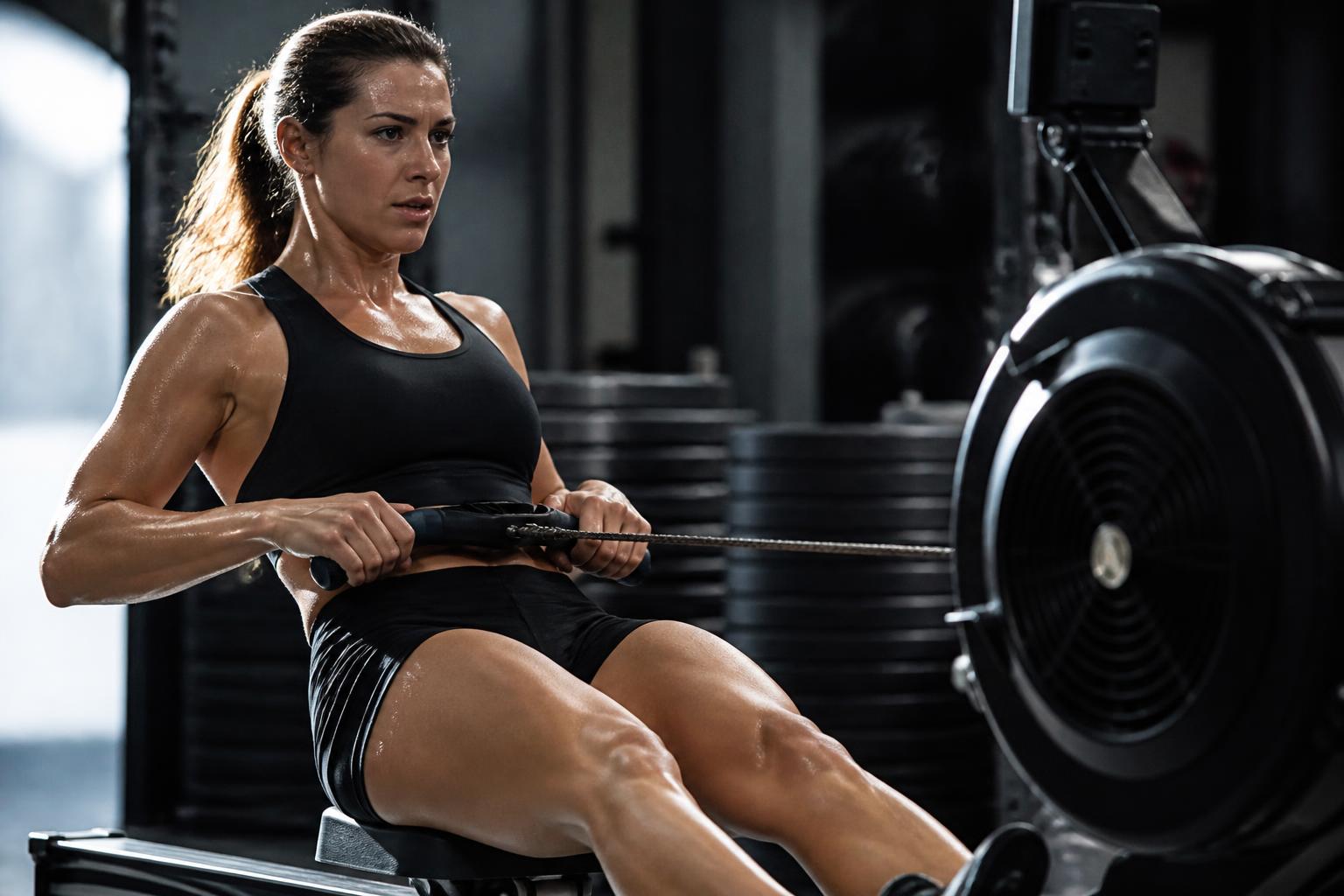
The 1,000-metre row is the third station in a HYROX race, positioned right after the Sled Pull and before the Burpee Broad Jumps. By this point in the race, your heart rate is likely pinned, and your legs are feeling the "heavy" sensation from moving the weighted sleds.
While a 1,000m row might seem straightforward, it is one of the most common places where athletes blow their heart rate through the roof for very little time gain. Mastering the 1,000m row isn't about being the fastest person on the Concept2; it’s about being the most efficient person to ensure you have legs left for the burpees and the remaining five kilometres of running.
The HYROX Rower Context: Don't Race the Machine
In a vacuum, a 1k row is a sprint. In HYROX, it’s a transition. If you row a "personal best" 1k, you might save 10 seconds compared to a steady pace, but you risk adding 60 seconds to your Burpee Broad Jumps because you’re gasping for air.
At Fit 4 Life Club, we teach our athletes to view the row as a chance to recalibrate. You want to maintain a pace that is roughly 3–5 seconds slower (per 500m split) than your standalone 2,000m row pace.
Efficiency Over Effort: Technique Cues
To save your legs for the rest of the race, your rowing technique must be impeccable. Focus on these three pillars:
1. The 1:2 Ratio (Drive to Recovery)
The biggest mistake athletes make is "rushing the slide." They pull hard and then zip back toward the flywheel. This keeps your heart rate sky-high. Instead, drive back powerfully (1 count) and take a deliberate, slower return to the front (2 counts). This "mini-rest" on the recovery allows for better oxygen exchange.
2. Heel Connection
Keep your heels glued to the footplates for as long as possible. Lifting your heels early in the stroke shifts the tension into your calves and quads—muscles you desperately need for the Wall Balls later on. Drive through the mid-foot and heel to engage the hamstrings and glutes.
3. Breathe with the Rhythm
Do not hold your breath. Exhale forcefully at the "finish" (when the handle is at your chest) and inhale during the recovery. Consistent breathing prevents the CO2 buildup that leads to mid-race panic.
The 1,000m Race Strategy
Break your 1,000m into three distinct phases to ensure you stay on target:
- 0m – 200m: The Settlement (Finding the Rhythm) Don’t "jack" the handle to get the flywheel moving. Use 5-10 powerful strokes to get up to speed, then settle immediately into your target split. Do not chase the person in the lane next to you.
- 200m – 800m: The Cruise Control This is where the mental game happens. Focus on long, smooth strokes. Check your SPM (strokes per minute); for most HYROX athletes, a stroke rate between 24 and 28 is the "sweet spot" for efficiency.
- 800m – 1000m: The Transition Prep In the final 200m, resist the urge to sprint. Instead, focus on deep, rhythmic breaths. Unstrap your feet one at a time while the monitor is still counting down the last few metres. This allows you to step off the rower and start your run to the Burpee station without fumbling.
Specific HYROX Row Workouts
To improve your 1k row within the context of a race, you must practice "compromised rowing." Here are two sessions we use at our Port Coquitlam gym:
The "Leg Burn" Row
- 500m Row (Target HYROX Pace)
- 20 Walking Lunges (Bodyweight)
- Rest 60 seconds
- Repeat 6-8 times.
- Goal: Learn to find your rowing rhythm while your legs are filled with lactate.
The 1k Simulation
- 1,000m Row
- Immediately into 20 Burpee Broad Jumps
- Rest 3 minutes
- Repeat 3 times.
- Goal: Practice the transition from the rower to the specific movement that follows it in the race.
Equipment and Setup Tips
Before you start your 1,000m during the race, take two seconds to check your setup:
- Damper Setting: Most HYROX athletes should keep the damper between 5 and 7. Setting it to 10 (the "heavy" setting) often leads to early muscle fatigue in the lower back without providing a significant speed advantage for most body weights.
- Foot Straps: Ensure the strap crosses over the widest part of your foot (the ball of the foot). This provides the best leverage for the drive.
- Handle Grip: Hold the handle lightly with your fingers, not a "death grip." This saves your forearms for the Farmers Carry and Pull-ups later in the season.
Conclusion
The 1,000m row in HYROX is a game of patience and poise. By focusing on a controlled stroke rate, a strong heel drive, and a disciplined pacing strategy, you will exit the rowing station ready to attack the second half of the race.
If you're training for HYROX Port Coquitlam or looking to sharpen your rowing technique, come visit us at Fit 4 Life Club for a coached session on the Concept2. Efficient rowing isn't just about strength; it's about making the 1,000m feel like the easiest part of your race day.
Train with us in Port Coquitlam.
Coached HYROX, functional conditioning, and stretch sessions for Port Coquitlam, Coquitlam, Port Moody & Pitt Meadows — book a free trial.